


Call Us Today
540-662-4222Who Is Responsible for a Chain-Reaction Crash on I-81 in Virginia?
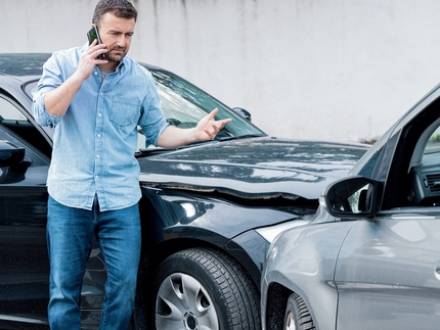 A chain-reaction crash can leave your vehicle damaged at both ends and several drivers giving different accounts of what happened.
In Virginia, responsibility rests on whose careless actions caused or contributed to the harm. More than one driver could be liable. If you were injured in an I-81 accident in 2026, our Winchester, VA car accident attorneys will investigate and help you pursue compensation.
How Is Fault Determined in a Virginia Chain-Reaction Crash?
Fault is determined by examining how each driver’s actions contributed to the crash. The investigation must establish the order of impacts and whether a driver failed to take reasonable care.
Under Virginia Code § 46.2-816, drivers must leave a reasonable following distance based on speed, traffic, and road conditions. A driver who follows too closely could be at fault if they cannot stop when traffic slows.
The driver who strikes another vehicle is not always the one who created the danger. For example, someone who cuts into a lane without enough room could force nearby drivers to brake or collide. The cause of the crash is more important than which vehicle made contact first.
Are You Responsible if Another Vehicle Pushes Yours Into the Car Ahead?
Being pushed into another car does not, by itself, establish that you were negligent. If you stopped safely and another vehicle forced yours forward, the driver who struck you could be responsible for that collision.
Describe what you experienced as accurately as possible, including whether you were stopped and how many impacts you felt. If you do not know the sequence, say so rather than guessing. Your account should be compared with the physical evidence and other witnesses’ observations.
Can Several Drivers Share Responsibility for an I-81 Pileup?
Several drivers share legal responsibility when their separate mistakes contribute to the same injuries. The driver who started the crash is not necessarily the only person liable.
Suppose an unsafe lane change causes the first collision. Another driver approaching the wreck while distracted could cause an additional impact that worsens someone’s injuries. Both drivers’ conduct deserves examination, including whether the approaching driver had a reasonable chance to avoid the crash.
A commercial truck adds another potential source of liability. When an employee causes a collision while performing work duties, the trucking company could also be responsible. A separate claim against the company could arise if its own conduct, such as neglected maintenance, contributed to the crash.
The claim must connect each party’s actions to the injuries being claimed. Simply being involved in the pileup does not make every driver responsible for everyone’s harm.
How Do You Handle Multiple Insurance Claims After an I-81 Crash?
A chain-reaction crash could involve claims with more than one driver’s insurer. One insurer might accept responsibility while another disputes it.
Keep the claims organized by tracking:
- Each insurer’s claim number and adjuster’s contact information
- Which injuries or expenses each company disputes
- Any requests for records or statements and your responses
- Settlement offers and the claims each proposed release would resolve
Give consistent, accurate information. If an adjuster asks which collision caused a particular injury, explain what you know and leave medical conclusions to your providers.
Before signing a release, have its wording checked for effects on claims against other drivers. You need to be careful when resolving one insurer’s claim while other parts of the case remain open.
What if an Insurer Says You Helped Cause the Virginia Crash?
Virginia’s contributory negligence rule can bar recovery if your own negligence contributed to causing your injuries. This makes an allegation that you were following too closely or driving too fast especially significant.
The insurer must do more than point to your involvement in the crash. The alleged mistake must have a legal connection to the harm. Being caught between vehicles does not automatically establish that you contributed to the collision.
Ask the adjuster to explain the specific conduct it disputes and the evidence supporting its position. Your attorney will assess that argument and challenge unsupported efforts to blame you. If the case reaches trial, the court process determines responsibility rather than the insurer’s assessment alone.
Contact a Winchester, VA Car Accident Lawyer
Several impacts should not leave you facing competing insurance arguments alone. At Parthemos, Curran, Buelow and Polizzi, PLLC, our attorneys will handle the insurance disputes so you can focus on your recovery.
Our team brings more than 120 years of combined experience and handles complex injury cases that other firms decline. Contact our Manassas, VA car accident attorneys or call 540-662-4222 for a free consultation.


Our law firm has offices in Winchester and Manassas, and we provide legal services to clients throughout Virginia, including Prince William County, Woodbridge, Haymarket, Gainesville, Front Royal, Berryville, Boyce, Burke, Fairfax, Strasburg, Woodstock, and Warrenton.
© 2026 Parthemos, Curran, Buelow and Polizzi, PLLC 206 South Cameron St., Winchester, VA 22601 9214 Center St., Third Floor, Manassas, VA 20110 540-662-4222
Results listed are not a guarantee or indication of future case results.
